
FOOTBALL: HEADING THE BALL
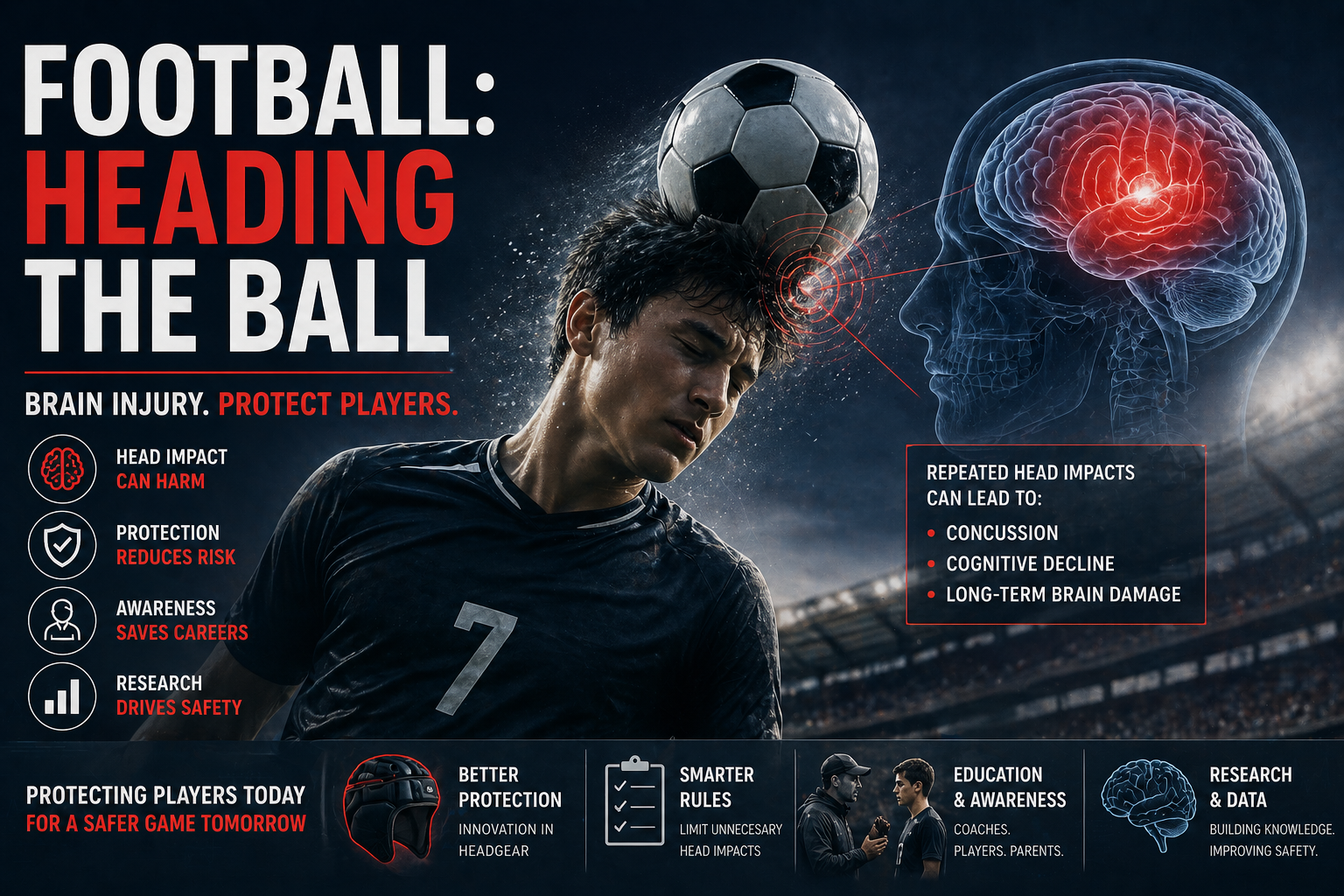
For some time, it has been known that heading a football can lead to long-term cognitive damage from cumulative, sub concussive impacts.
Repetitive heading, particularly over 1,000 times a year, can cause brain microstructural changes, which are similar to mild traumatic brain injury, particularly impacting white matter, causing it to deform and stretch.
Health risks include chronic headaches, cognitive impairment, and a greater risk of neurodegenerative diseases, such as Parkinson’s and Alkheimer’s, in later life.
Children and teenagers are more likely to suffer long-term health issues from repetitive heading as their brains are still developing.
In 2019, the ‚Field‘ study, an independent research project, which was funded by the English Football Association (FA) and the Professional Footballers‘ Association and conducted by the University of Glasgow and the Hampden Sports Clinic, has found, through statistical analysis, that football players were 3.5 times more likely to suffer from neurodegenerative diseases in later life.
Since then, the FA has brought in a phased ban of heading in under-11s football and has stated that it is investing in objective and robust research to get a better understanding of the issues. The FA has also issued guidelines to football clubs on limiting high force headers in training, for example, from footballs which come at speed from free-kicks and corners.
In fact, the Scottish Football Association has gone further and has banned heading the day before and after matches in the professional adult game in Scotland.
Other mitigating measures have been introduced by the football authorities, which include proper heading techniques and reducing the frequency of heading drills in training sessions, both of which can reduce the risk of injuries.
One of the measures suggested by the Swiss Players Union SAFP and the Sport Doctors Network, is the introduction of an independent doctor at matches to assess injured players and decide whether they are fit to continue to play. At present, the decision is left to team doctors, but they can be overruled by coaches, who are not keen to lose a player, or by the players themselves.
But what about the design and composition of the footballs themselves, do they play a part in causing these health issues?
Based on new research conducted by the Sports Technology Institute at Loughborough University in the United Kingdom and published on 20 April 2026, sports scientists believe that footballs can be designed to reduce the impact of heading, after the research discovered that heading caused a previously unknown pressure wave transfer of energy to the brain. They found that this was up to 55 times greater in some footballs rather than in others, using a model head to test energy transfer through the head when struck by different footballs.
According to the lead researcher at Loughborough University, Dr Ieuan Phillips:
„These findings provide opportunities to work towards ball designs and testing specifications that minimise energy transfer into the brain.”
And added:
„We’re hoping that this discovery provides some valuable information that could look more specifically at the potential causes of the disease that we’re seeing in retired players.”
The results of the Loughborough University research are being shared with FIFA and UEFA, who are continuing to carry out their own research and issue protocols relating to the risks to football players of concussion and brain injury linked to heading footballs, in line with their policy of managing such risks rather than banning heading, which is an integral part of the game.
We act in sports injuries cases, however caused, and further information is available from Dr Lucien Valloni by emailing him at valloni@valloni.ch.