
DISCRIMINATION AGAINST WOMEN IN FOOTBALL
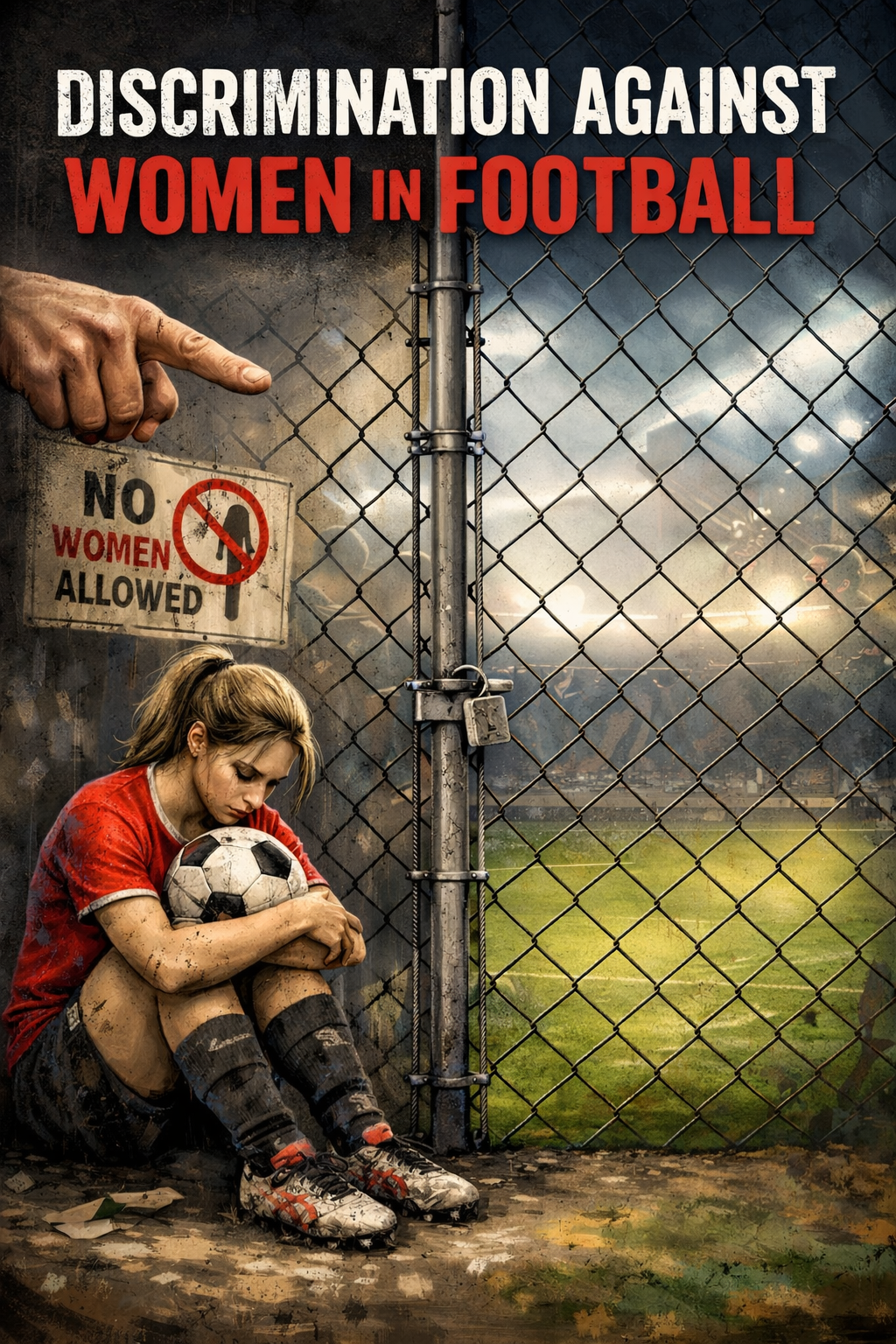
Discrimination against women in football is widespread and, on the increase, despite campaigns and initiatives aimed at reducing it (see below).
It is reported that 89% of women involved in football and women fans of the men’s game are experiencing sexism, bullying, or harassment.
The key concerns include the gender pay gap; lack of senior leadership roles; online abuse; and sexual harassment. Although there has been some progress, there appears to be some unconscious bias, and male dominance remains a significant barrier to achieving equality.
47% of women have experienced sexism in the workplace, and 62% have reported sexist ‘banter’.
93% of women have reported that they have faced obstacles in their careers in football, especially as board members, managers, coaches and referees, due to their gender.
91.9% of women have witnessed sexist online abuse.
And 56% of women have stated that no action has been taken by the football authorities after they have reported cases of gender-based discrimination.
Discrimination, particularly in the form of sexual harassment and online abuse, disproportionately affects women from underrepresented ethnic groups.
It also appears that women are still suffering from economic inequality, and, in particular, FIFA is working towards equal pay for the 2027 Women’s World Cup in Brazil. Such inequality results from historical lack of investment in the women’s game; lower broadcasting revenues, and less sponsorship interest compared with the men’s game.
Furthermore, female athletes, including women footballers, continue to receive less media attention and coverage and are often subjected to sexualised stereotypes and objectification.
Against this background, there are a number of campaigns and initiatives that are being taken to tackle discrimination against women in football, and mention may be made of the following:
- Her Game Too: a campaign group that fights against sexism and champions women in sport.
- Women in Football (WIF): an organisation that is working to empower women in the industry through training, mentorship, and reporting mechanisms.
- Kick It Out: acts against sexism and racist abuse, providing platforms for reporting and educating fans.
- Social Media Policing: proactive action is being taken to remove hateful content on social media sites, such as X (Twitter) and Facebook.
- Common Goal’s Play Proud: provides over 100 hours of training to clubs to create safe and inclusive environments for the LGBTQ+ community.
We advise on all legal aspects of gender discrimination in sport, including women’s football, and information is available from our Managing Partner, Dr Lucien Valloni, and our International Sports Law Consultant, Prof Dr Ian Blackshaw, by e-mailing them at valloni@valloni.ch and blackshaw@valloni.ch respectively.