
THE NAPOLITANO DOPING CASE
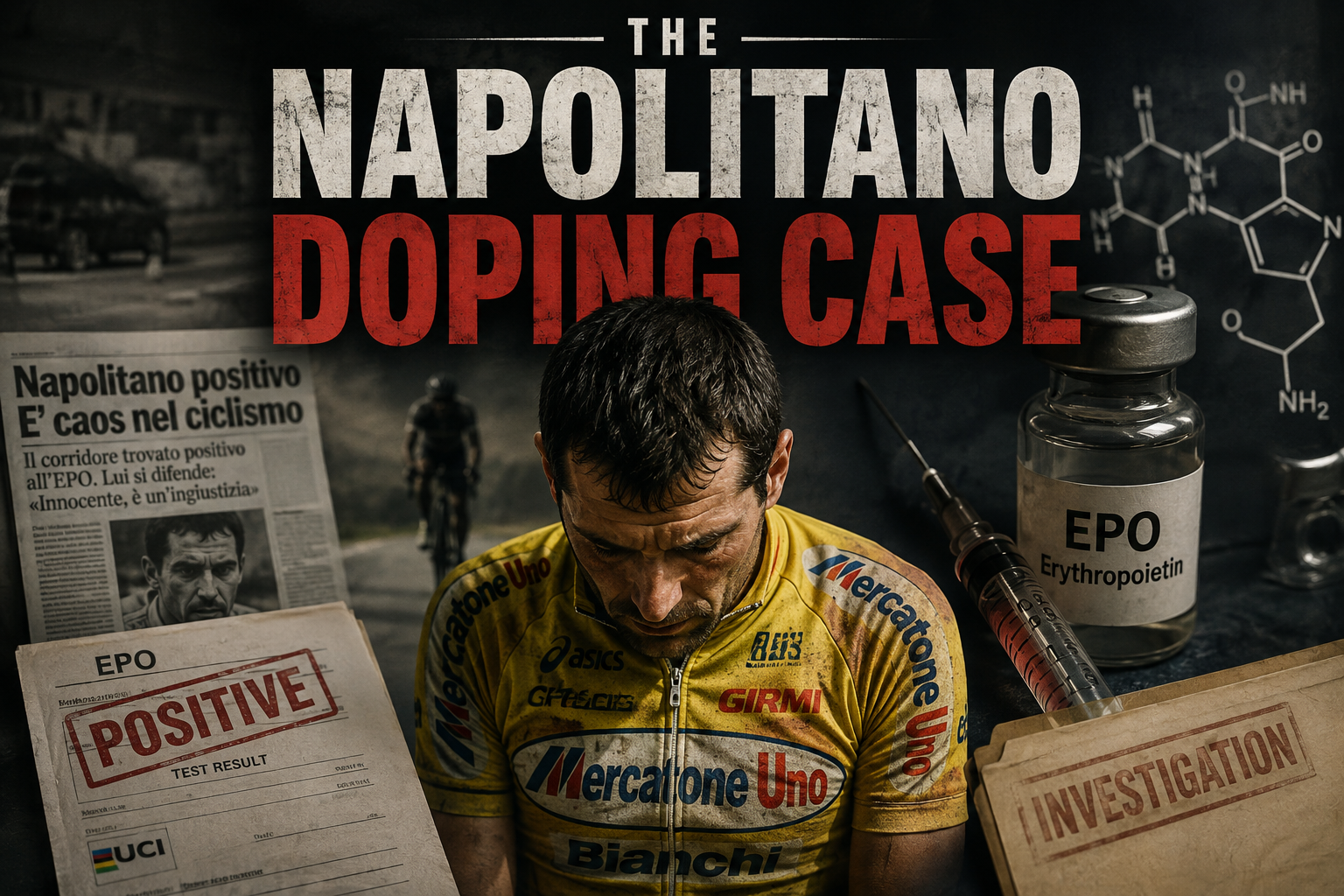
The recent decision of the Italian National Anti-Doping Tribunal (Tribunale Nazionale Antidoping – TNA) imposing a twenty-year period of ineligibility on former professional cyclist Danilo Napolitano provides an important opportunity to examine the operation of the anti-doping adjudicatory system in Italy and, in particular, the liability of Athlete Support Personnel (ASP), a category to which the World Anti-Doping Code (WADC) attaches particular significance.
Following several months of investigation and evidentiary proceedings, the case concluded with one of the most severe sanctions available under the anti-doping regulatory framework: a twenty-year ban from participation in any activity falling within the jurisdiction of the relevant sports governing bodies.
The proceedings were conducted pursuant to the Italian National Anti-Doping Rules (Norme Sportive Antidoping – NSA) adopted by NADO Italia, which implement the WADC, issued by the World Anti-Doping Agency (WADA), within the Italian legal system. The NSA extend well beyond sanctioning athletes who test positive in doping controls. Rather, they identify eleven independent Anti-Doping Rule Violations (ADRVs), many of which may also be committed by coaches, athletic trainers, sports directors, physicians and other members of an ASP.
In the present case, the alleged violations concerned Articles 2.6 and 2.8 of the WADC.
Article 2.6 prohibits the possession of prohibited substances or prohibited methods. Liability under this provision does not depend upon proof that the substance was actually used; it is sufficient to establish that the individual had actual or constructive possession of the prohibited substance or method, unless he or she can demonstrate a legitimate justification, such as a valid Therapeutic Use Exemption (TUE) or another defence expressly recognised under the WADC. In the case of ASP, the burden of providing a credible explanation for such possession is particularly significant, as these individuals—unlike athletes—will rarely be able to rely upon a TUE arising directly from their sporting activities.
Article 2.8, by contrast, addresses a much broader range of prohibited conduct. It encompasses administration; attempted administration; assistance; encouragement; aiding; abetting; conspiring; covering up; or any other form of intentional complicity involving the use of prohibited substances or methods. The rationale underlying this provision is self-evident: doping is frequently the product of coordinated conduct involving multiple actors rather than the isolated decision of an individual athlete. Accordingly, the anti-doping framework imposes direct liability upon those whose conduct enables, facilitates or contributes to the commission of ADRVs.
The disciplinary proceedings are conducted in accordance with the procedural rules laid down in the NSA. Following the investigative activities carried out by the competent office of NADO Italia, formal charges are notified to the respondent. The accused is entitled to full access to the case file; to submit written observations; produce documentary evidence; identify and request the admission of witnesses and other evidence; and to be represented by one or more legal counsel throughout the proceedings.
The case is heard before the TNA, an independent adjudicatory body vested with jurisdiction to determine whether an ADRV has been established and, where appropriate, to impose the applicable sanction. In assessing the evidence, the TNA applies the standard of comfortable satisfaction; the evidentiary threshold traditionally applied in international sports law. This standard occupies an intermediate position between the civil standard of the balance of probabilities and the criminal standard of proof beyond reasonable doubt and has been consistently developed and applied in the jurisprudence of the Court of Arbitration for Sport (CAS).
Where the TNA concludes that an ADRV has been established, it determines the applicable period of ineligibility in accordance with Articles 10 et seq. of the WADC. The length of the sanction depends upon several factors, including the nature of the violation; whether the conduct was intentional; the existence of aggravating or mitigating circumstances; and the extent of any substantial assistance provided by the respondent to the anti-doping authorities.
A decision of the TNA is not, however, final. Under the NSA, the respondent is entitled to lodge an appeal before the National Anti-Doping Appeal Tribunal (Corte Nazionale d’Appello Antidoping) within the prescribed time limits. On appeal, both the factual findings and the legal characterisation of the alleged conduct may be challenged, together with the proportionality and appropriateness of the sanction imposed.
Once the domestic remedies have been exhausted, the decision may be further appealed before CAS in Lausanne, Switzerland, the international arbitral tribunal that constitutes the appellate instance for the vast majority of international sports disputes.
The Napolitano case illustrates the continuing evolution of sports law towards a model of liability extending beyond athletes themselves to encompass the wider organisational environment in which they compete. The overriding objective pursued by the WADC is to safeguard both the integrity of sporting competitions and the health of athletes by holding accountable not only competitors, but also their coaches, team officials and members of the ASP, whose conduct contributes to or facilitates doping practices.
Against this background, anti-doping disciplinary proceedings have become one of the most specialised areas of sports law. They are characterised by autonomous procedural rules; distinctive evidentiary standards; and a sophisticated appellate system culminating in the jurisdiction of CAS, whose role is to ensure the consistent interpretation and uniform application of the WADC across all signatory sporting organisations.
We advise on and represent clients in doping cases in Italy and further information is available from the Head of our Italian Practice, Avv. Sara Botti, by emailing her at botti@valloni.ch.