
THE REGULATION OF MONEY LAUNDERING IN SPORT IN SWITZERLAND
In General
Money laundering is a significant and growing problem in sport, which is now a multi-billion US dollar industry in its own right, particularly in association football, the world’s favourite and most lucrative sport.
This is largely due to the eye-watering sums, cross-border transactions, and opaque ownership structures involved. Criminals use a variety of methods in sport to disguise the origins of illicit funds.
Particular risk areas in football include:
- Opaque ownership structures: many football clubs are owned through complex networks of holding and shell companies, which are often registered in offshore tax havens, which makes identifying the true beneficial owners of these clubs difficult for law enforcement agencies and football regulators.
- Sponsorship and image rights deals: advertising, sponsorship contracts, and image rights arrangements may be used to inject dirty money into sport, especially where payments are routed through high-risk jurisdictions, such as the British Virgin Islands and Russia.
- Transfer deals: the subjective valuation of footballers and their transfers facilitates the concealment and movement of illicit funds.
- Betting: illegal sports betting and match-fixing are also major conduits for money laundering and generating further criminal profits.
- Investments in clubs: criminals may invest illicit funds in financially distressed clubs to gain legitimacy and control mechanisms for money laundering, for example, the manipulation of broadcast deals or ticket sales.
In Switzerland
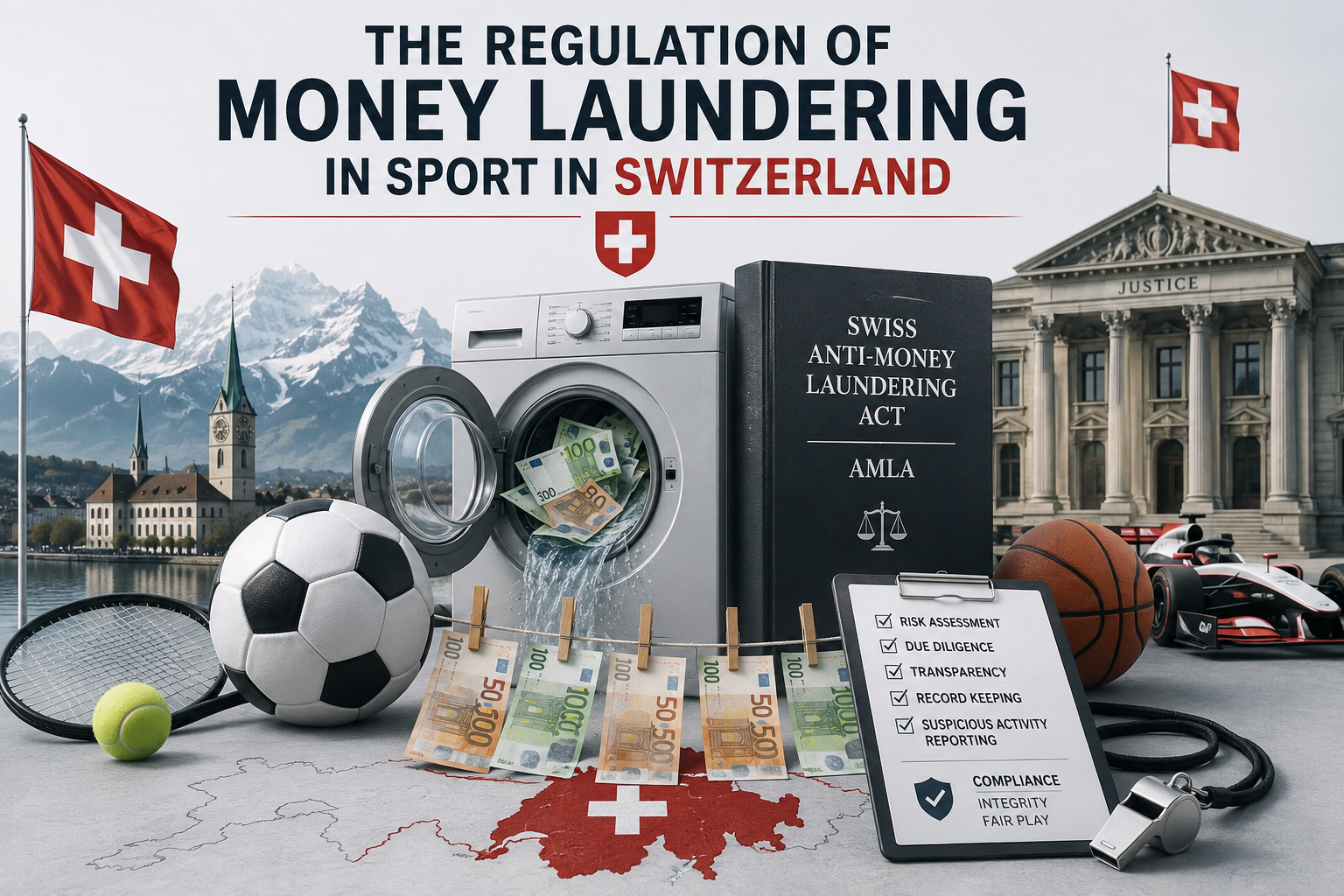
In Switzerland, money laundering in sport is regulated through strict compliance with the Anti-Money Laundering Act (AMLA), which treats senior officials of international sports federations as „Politically Exposed Persons“ (PEPs). Recent amendments in 2023 require stricter financial due diligence and scrutiny of transactions by Swiss-based sports governing bodies to prevent corruption and terrorist financing.
Key aspects of the regulation of money laundering in sport in Switzerland include:
- PEPs Classification:officials in international sports federations, which are based in Switzerland, are classified as PEPs, requiring financial institutions to apply higher scrutiny to their transactions.
- Legal Framework: The 2023 updates to the AMLA improved transparency for international sports federations structured as associations.
- Cash Transaction Cap: A limit of 15,000 Swiss francs on cash transactions helps to reduce money laundering risks.
- Reporting Obligations: Financial intermediaries, including those dealing with sports governing bodies, must report suspicious activities to the Money Laundering Reporting Office.
- Criminalisation: Private corruption and money laundering are criminalised under the Swiss Criminal Code, with increased focus on the financial dealings of sports administrators.
- Association Transparency: Whilst not all associations must register with the commercial registry, they must comply with increased transparency rules, particularly regarding financial flows.
All these Regulations apply to major international sports governing bodies, which are based in Switzerland, including FIFA, UEFA and the International Olympic Committee.
We advise on all legal aspects of money laundering in Sport in Switzerland, and further information is available by emailing either Dr Lucien Valloni or Kim Gamboni at valloni@valloni.ch and gamboni@valloni.ch respectively.