
MATCH FIXING IN ENGLISH FOOTBALL
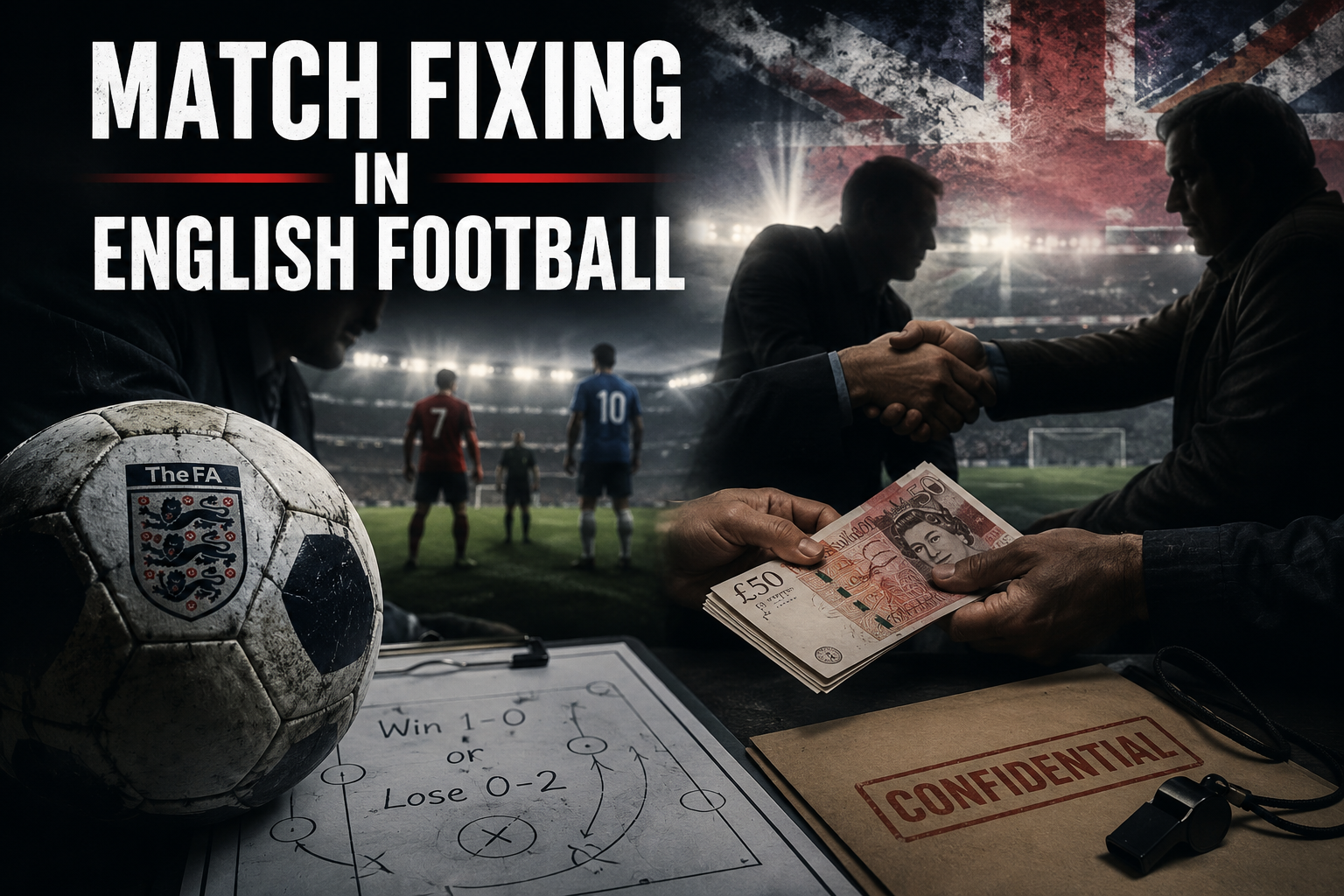
Match fixing involves arranging, in advance, the outcome or conduct of a match or a tournament, or any event within a match or tournament.
The main attraction for players and fans of association football, or, indeed, any other sport, is the uncertainty of the outcome of the matches and tournaments.
Match fixing is a form of cheating, which is anathema to the essential nature of sport, which is all about fair play – or, at least it should be – and is prohibited and treated very seriously by the sporting authorities.
In addition, offering or accepting any bribes related, in any way, to influencing improperly the outcome or conduct of a match or tournament, or any event within a match or tournament, is also prohibited and again a serious matter.
Approaches to fix matches or events within a match or tournament, or any event within a match or tournament, is not just the concern of players as these approaches may also be made to match officials, such as referees. They also could be offered money or rewards for influencing the outcome of a match by, for example, awarding penalties or sending off players unfairly.
The English Football Association (FA) has systems in place to take action in the event of becoming aware of any suspicious activity concerning a match or a tournament, for example, replacing the appointed match officials prior to the match or tournament.
Players and/or match officials who are approached or become aware of anything suspicious relating to a match or tournament, are required to report such instances to the FA immediately.
Failure to do so, may result in a charge by the FA, which, if proved, may lead to a suspension or, in very serious cases, to a suspension for life.
The FA warns players and match officials that, if they fix or attempt to fix matches and tournaments, they are likely to be caught and punished.
A popular form of match-fixing is betting on the issue of yellow cards.
In this connection, the recent case of the Ivory Coast international, Elye Wahi, who plays for Nice FC, may be mentioned.
After previously being refused entry into Canada, he was allowed entry to play for his country in their World Cup group match against Germany on 27 June 2026.
Apparently, he was arrested, in May 2026, for allegedly deliberately earning a yellow card, whilst playing for Nice against Metz, during the same month.
The case of Lucas Paquetá, who played for West Ham United FC, may also be mentioned. He was cleared, by an independent regulatory commission, of allegedly getting himself booked deliberately „for the improper purpose of affecting the betting market“ nearly two years after the FA had launched an investigation into him in August 2023.
After a hearing, the commission found that the charges against him had not been proven.
If the commission had found him guilty, he would have faced a lifetime ban.
We advise and represent clients in match-fixing cases in England, and in other countries which we cover, and further information regarding English cases is available from our International Sports Law Consultant, Prof Dr Ian Blackshaw, by emailing him at blackshaw@valloni.ch.