
THE LEGAL PROTECTION OF MINORS IN SPORT IN TÜRKİYE
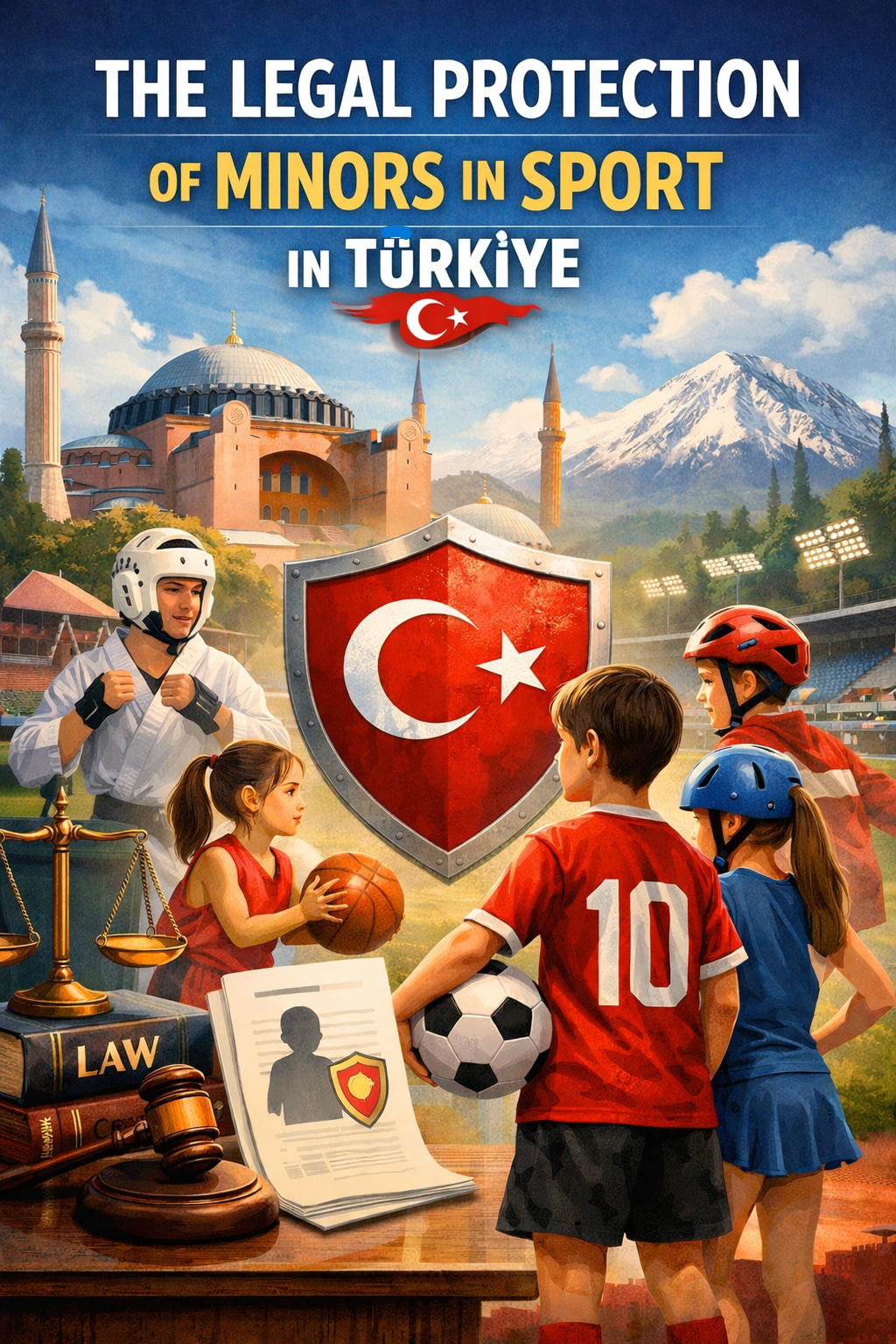
In the world of sport, we often focus on the scoreboard, the talent scouting, and the next big transfer.
But in Türkiye, the conversation has fundamentally shifted.
As of 2026, „the protection of minors in sport“ has evolved from a basic safety requirement into a sophisticated, multi-layered legal and digital framework. Whether on the field of play or in a digital arena, the Turkish state is taking an increasingly active role as the ultimate guardian of its youth.
The Bedrock: Constitutional and Penal Protections
Turkish law does not treat child protection as an afterthought. It begins at the very top: the Constitution. Article 41 establishes the state’s duty to protect minors, that is, persons under the age of 18, from abuse, whilst Articles 58 and 59 specifically task the government with shielding youth from „harmful habits“ and promoting their physical and mental health.
When things go wrong, the Turkish Penal Code (TPC) provides the teeth. Article 103 is particularly rigorous regarding sexual abuse, and for those in the world of sport, there is a critical „aggravator“: if a crime is committed by a coach, trainer, or educator, the penalty is increased by half. This reflects a clear legal stance: a position of trust in sport cannot be used as a shield for any kind of misconduct.
Institutional Leaders: The TFF and the „FIFA Guardians“
The Turkish Football Federation (TFF) has set the pace for other sports. Through its Welfare and Child Protection Department (established in 2017), the TFF has moved towards the „FIFA Guardians“ framework. This is not just a paper policy; it involves a comprehensive manual covering:
- Safe Recruitment: Background checks for all youth coaches.
- Mandatory Training: Teaching staff to identify signs of emotional and physical abuse.
- Reporting Protocols: Clear channels for athletes or parents to voice concerns.
Whilst research from 2025 and 2026 suggests that, in Türkiye, we are still moving from the „policy development“ phase to full-scale „operational culture“. The infrastructure is now undeniable.
2026: The Digital Revolution in Child Protection
The biggest headline this year is the Draft Law on the Protection of Children and Young People in the Digital Environment.
In a bold move, the Turkish government has proposed a total ban on social media access for children under 15.
For the world of sport, especially Esports, the implications are massive:
- Screen Time Limits: For athletes under 16, digital platforms must enforce a 55-minute daily limit (with a total blackout between 22:30 and 09:30).
- Age Ratings: All digital games must now feature strict age ratings (6+, 12+, 16+, 18+), and unrated titles are being blocked from distribution.
- Parental Oversight: Platforms must provide tools for parents to approve digital transactions, like „Robux“ or in-game skins and monitor usage duration.
The Esports Frontier: Protecting „Pro“ Kids
With the Turkish E-Sports Federation (TESFED) overseeing a boom in professional gaming, in Türkiye, we are seeing „pro“ players as young as 13.
This has created a unique legal gap.
Because these athletes are often under „service contracts“ rather than standard labour law, they can be vulnerable to unfair terms or excessive training hours.
The TESFED 2026 Strategic Plan is tackling this by standardising „Gaming House“ inspections and prioritising player well-being alongside competitive success. The goal is to ensure that a 14-year-old’s education and mental health are not sacrificed for a championship trophy.
Looking Ahead: Integrity and Accountability
Türkiye is also aligning with global standards on integrity.
In January 2026, the country signed the Additional Protocol to the Anti-Doping Convention, enhancing transparency in how, in Türkiye, we monitor the biological health of our athletes.
Whilst, in Türkiye, we are still waiting for the formal ratification of the Marcolin Convention to combat match-fixing, the principles are already being woven into domestic regulations.
The Takeaway for Clubs and Parents
The days of „discipline“ being a catch-all excuse for physical or emotional harshness of minors are over.
With the removal of the „right of correction“ in the Turkish Civil Code and the rise of trauma-informed safeguarding, the focus is now on creating a safe sport environment.
As we move further into 2026, the most successful sports clubs will not just be the ones with the best stats, they will be the ones that provide the safest harbour for the minors in their care.
For further information and advice on the legal protection of minors in sport in Türkiye, email the Head of our Turkish Law Practice, Gurur Gaye Günal, at gunal@valloni.ch.
.