
DATA PROTECTION OF ATHLETES IN GERMANY
Generally
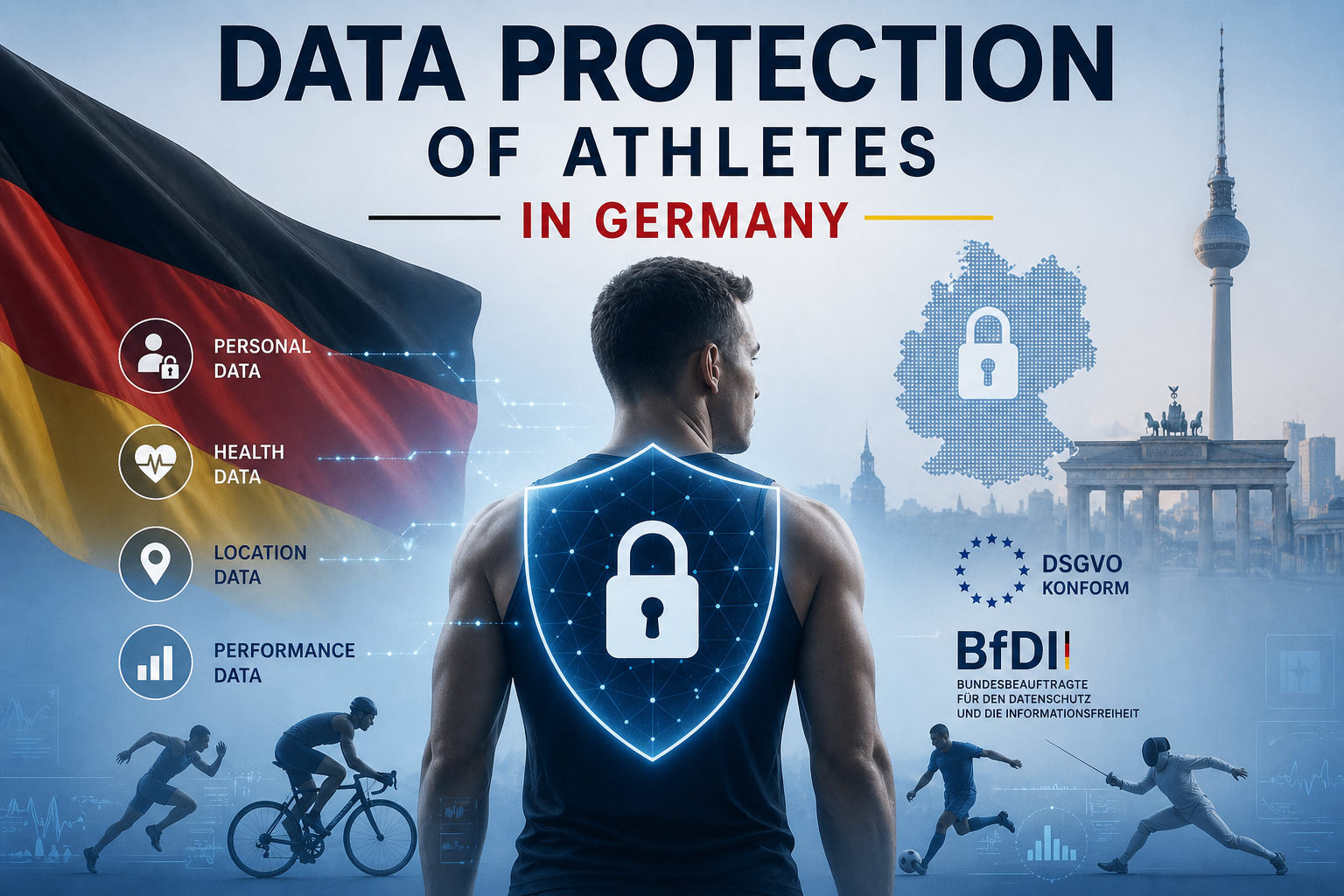
Sports data in Germany is highly developed and driven by top-tier analytics, AI integration, and the extensive use of data in team performances. For example, intensive data modelling and simulation have contributed to Germany’s consistent success in Olympic sliding sports, for example, luge, resulting in 38 gold medals as of early this year.
In fact, the German sports analytics market is expected to grow from US$250 million (around Sw. Frs. 196 million) in 2025 to US$700 million (around Sw. Frs. 548 million) by 2032.
The data protection of athletes in Germany is legally governed by the European Union General Data Protection Regulation (GDPR) and the German Federal Data Protection Act (BDSG).
Sports organisations, including clubs, federations, and anti-doping agencies, are required to limit the collection of the personal information of athletes, such as health and performance data, and to ensure their rights of consent, access and erasure.
Key Aspects
Legal Framework: The BDSG aligns with the GDPR, specifically addressing employee data in a professional sports context (section 26 BDSG).
Health and Performance Data: Processing sensitive data, such as medical information and performance metrics, requires strict compliance with the GDPR, requiring, in many cases, a “Data Protection Impact Assessment” (DPIA).
Anti-Doping and Transparency: Whilst sports organisations often publish details of sanctions, new legal interpretations suggest a “case-by-case balancing” of interests to protect athletes’ privacy, often advocating for pseudonymisation rather than total public disclosure.
Athletes’ Rights: Athletes have the right to access, rectify, and erase their data.
Compliance: Several sports organisations are required to appoint a designated Data Protection Officer to oversee compliance.
Key Principles
Purpose Limitation: Athletes’ data can only be used for the specific purpose that it was collected.
Data Minimisation: Only necessary athletes’ data may be processed.
Transparency: Athletes must be informed about how their data is used.
We advise athletes and sports organisations on all aspects of sports data protection in Germany and elsewhere, including disputes, and further information is available from Prof Dr Ian Blackshaw and Dr Lucien Valoni, by emailing them at blackshaw@valloni.ch and valloni@valloni.ch respectively.